
The "Highest & Best Use" Fallacy in a High Rate Environment
The "Highest and Best Use" analysis is a cornerstone of real estate valuation, but in a high-rate environment, it becomes a dangerous fallacy. The most intense use is rarely the most profitable when capital carries a double-digit cost.
For generations, real estate appraisers and developers have worshiped at the altar of "Highest and Best Use" (HBU). The concept is simple: the value of a piece of land is determined by the most profitable legal, physical, and financially feasible use. Traditionally, this has meant a relentless push for density—more units, taller buildings, greater intensity. But in a sustained high-interest-rate environment, this orthodoxy becomes a value trap. The highest use is no longer the best use.
The Math Has Changed
The HBU analysis is built on a residual land value model. An appraiser projects the revenue from a fully developed project (offices, condos, or apartments), subtracts all hard and soft costs, and the remainder is what the land is worth. The "highest" use is the one that yields the largest residual.
This model is exquisitely sensitive to the cost of capital. When interest rates are at 3%, a 30-story condo tower makes sense. Construction debt is cheap, and the capitalization rate (or "cap rate") at which the stabilized asset is valued is low. But when rates hover at 6% or higher, the math inverts. The same tower now requires interest payments that bleed the project during construction, and the eventual buyer demands a higher yield, pushing down the terminal value.
The Density Trap
In a high-rate environment, density becomes a liability. High-rise construction costs significantly more per square foot than mid-rise or garden-style product. Steel, concrete, union labor, and complex mechanical systems all demand premiums. These costs are financed at high rates, compounding the expense. Meanwhile, the rent premiums for high-rise living may not expand proportionally. If tenants or condo buyers cannot absorb the increased carrying costs, the project's feasibility collapses.
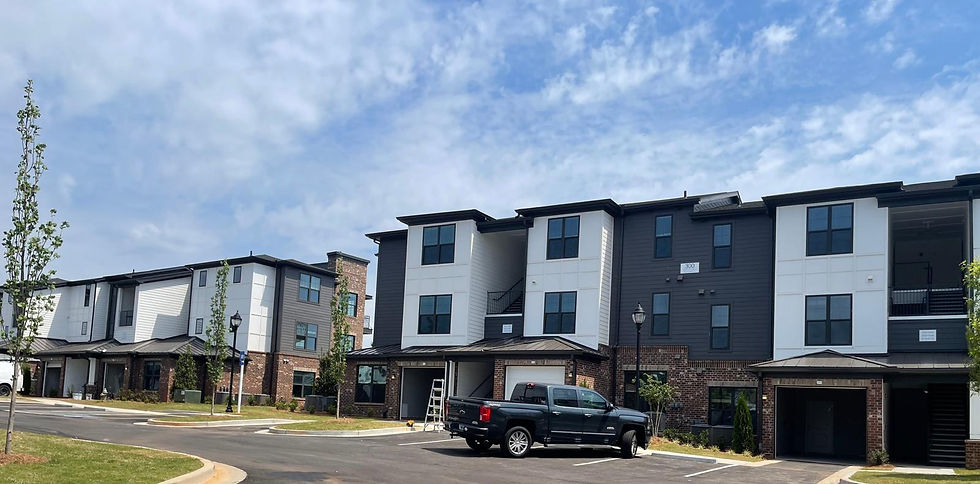
This leads to a counterintuitive reality: the "highest" use (most dense) may generate a negative land value, while a "lower" use (simpler product) remains profitable. A developer might find that a five-story, wood-frame apartment building generates a superior risk-adjusted return to a 20-story concrete tower, even if the tower "should" be worth more in theory.
The Time Arbitrage
There is another dimension to this fallacy: time. High-rate environments are often volatile. A project that takes four years to complete faces immense execution risk—rates may drop, but they may also rise further. A lower-intensity project that can be delivered in 18 months offers something precious: optionality. The capital is returned faster and can be redeployed when the landscape clarifies.
This is where sophisticated investors diverge from textbook appraisal. They recognize that in a high-rate world, liquidity and speed have intrinsic value. A project that breaks even but turns capital quickly may outperform a "home run" that takes a decade and nearly fails twice.
Rethinking "Best"
The fallacy of HBU is its static nature. It assumes the optimal use is a physical characteristic of the land itself. In reality, the optimal use is a function of the capital markets. When money is expensive and uncertain, the best use is often the simplest, fastest, and least leveraged. It is the use that survives, not the one that dazzles.
This does not mean density is dead. It means the threshold for pursuing intensity is higher. The project must possess true pricing power—irreplaceable locations, deep-pocketed tenants, or pre-sales that lock in revenue. For everyone else, the prudent path is to build what the market can afford today, not what a low-rate proforma promised yesterday. In a high-rate environment, humility is the highest and best use of capital.